
XXXIX. How a Sacred Scribe
XXXIX. HOW A SACRED SCRIBE.
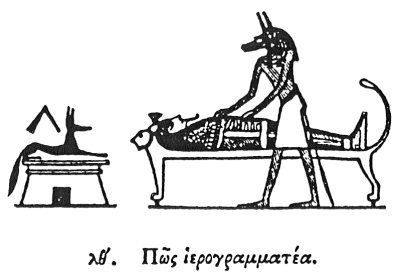
And again when they would denote a sacred scribe, or a prophet, or an embalmer, or the spleen, or smelling, or laughter, or sneezing, [or government, or a judge,] they depict a DOG. And by this they denote a sacred scribe, because it is necessary for one who is desirous of becoming a perfect sacred scribe to be extremely careful, and to bark perpetually, and to be fierce,
fawning upon no one, like dogs. And they symbolise by it a prophet, because the dog gazes intently 1 upon the images of the gods more than all other animals, as does a prophet. And an embalmer of the sacred animals, because he also surveys the naked and dissected forms which are preserved by him. And the spleen, because this animal alone of all other creatures has this organ very light: and whether death or madness seizes him it arises from his spleen. And those who attend this animal in his exequies, when about themselves to die, generally become splenetic; for smelling the exhalations from the dog, when dissecting him, they are affected by them.
And it denotes smelling, and laughter, and sneezing, because the thoroughly splenetic are neither able to smell, nor laugh, nor sneeze.