
The Sibylline Oracles
18 chapters English Public domain
About this book
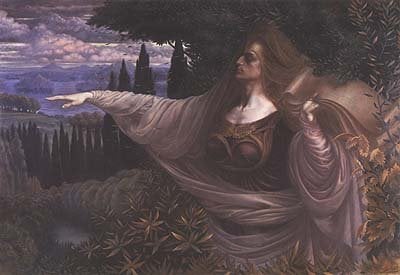
As the translator notes, this collection should more properly titled 'the Pseudo-Sibylline Oracles'. The original Sibylline Books were closely-guarded oracular scrolls written by prophetic priestesses (the Sibylls) in the Etruscan and early Roman Era as far back as the 6th Century B.C.E. These books were destroyed, partially in a fire in 83 B.C.E., and finally burned by order of the Roman General Flavius Stilicho (365-408 C.E.).
There is very little knowledge of the actual contents of the original Sibylline Books. The texts which are presented here are forgeries, probably composed between the second to sixth century C.E. They purport to predict events which were already history or mythological history at the time of composition, as well as vague all-purpose predictions, especially woe for various cities and countries such as Rome and Assyria. They are an odd pastiche of Hellenistic and Roman Pagan mythology, including Homer and Hesiod; Jewish legends such as the Garden of Eden, Noah and the Tower of Babel; thinly veiled references to historical figures such as Alexander the Great and Cleopatra, as well as a long list of Roman Emperors; and last but not least, Gnostic and early Christian homilies and eschatological writings, all in no particular order. There may be actual residue of the original Sibylline books wedged in here and there, but this is dubious.
Table of contents
18 chapters
Audiobook
Listen to this edition
Audiobooks are coming soon
Narrated editions will appear here when they are ready to listen.
Membership
Support the archive
$10 / month
Helps fund new texts & growth
Unlimited highlights & annotations
Unlimited bookmarks
Ad free reading experience
Early access to new features
Early access to quality TTS Audiobooks
Priority support & feature requests
4,000 Points monthly for Search usage
Access to point system rewards and value
Cancel anytime. Helps us pay the bills.
Discussion
Community conversation
Discussions are coming soon
Join conversations around this text and its interpretations.
The Sibylline Oracles
18 chapters English Public domain
About this book
As the translator notes, this collection should more properly titled 'the Pseudo-Sibylline Oracles'. The original Sibylline Books were closely-guarded oracular scrolls written by prophetic priestesses (the Sibylls) in the Etruscan and early Roman Era as far back as the 6th Century B.C.E. These books were destroyed, partially in a fire in 83 B.C.E., and finally burned by order of the Roman General Flavius Stilicho (365-408 C.E.).
There is very little knowledge of the actual contents of the original Sibylline Books. The texts which are presented here are forgeries, probably composed between the second to sixth century C.E. They purport to predict events which were already history or mythological history at the time of composition, as well as vague all-purpose predictions, especially woe for various cities and countries such as Rome and Assyria. They are an odd pastiche of Hellenistic and Roman Pagan mythology, including Homer and Hesiod; Jewish legends such as the Garden of Eden, Noah and the Tower of Babel; thinly veiled references to historical figures such as Alexander the Great and Cleopatra, as well as a long list of Roman Emperors; and last but not least, Gnostic and early Christian homilies and eschatological writings, all in no particular order. There may be actual residue of the original Sibylline books wedged in here and there, but this is dubious.
Table of contents
18 chapters
Audiobook
Listen to this edition
Audiobooks are coming soon
Narrated editions will appear here when they are ready to listen.
Membership
Support the archive
$10 / month
Helps fund new texts & growth
Unlimited highlights & annotations
Unlimited bookmarks
Ad free reading experience
Early access to new features
Early access to quality TTS Audiobooks
Priority support & feature requests
4,000 Points monthly for Search usage
Access to point system rewards and value
Cancel anytime. Helps us pay the bills.
Discussion
Community conversation
Discussions are coming soon
Join conversations around this text and its interpretations.

The archive, offline Own the Wisdom of the Ages Every text in the library on a single USB drive. Read offline, cite freely, keep forever. No subscription required.
Get the drive $127.00
The Sibylline Oracles
18 chapters English Public domain
About this book
As the translator notes, this collection should more properly titled 'the Pseudo-Sibylline Oracles'. The original Sibylline Books were closely-guarded oracular scrolls written by prophetic priestesses (the Sibylls) in the Etruscan and early Roman Era as far back as the 6th Century B.C.E. These books were destroyed, partially in a fire in 83 B.C.E., and finally burned by order of the Roman General Flavius Stilicho (365-408 C.E.).
There is very little knowledge of the actual contents of the original Sibylline Books. The texts which are presented here are forgeries, probably composed between the second to sixth century C.E. They purport to predict events which were already history or mythological history at the time of composition, as well as vague all-purpose predictions, especially woe for various cities and countries such as Rome and Assyria. They are an odd pastiche of Hellenistic and Roman Pagan mythology, including Homer and Hesiod; Jewish legends such as the Garden of Eden, Noah and the Tower of Babel; thinly veiled references to historical figures such as Alexander the Great and Cleopatra, as well as a long list of Roman Emperors; and last but not least, Gnostic and early Christian homilies and eschatological writings, all in no particular order. There may be actual residue of the original Sibylline books wedged in here and there, but this is dubious.
Table of contents
18 chapters
Audiobook
Listen to this edition
Audiobooks are coming soon
Narrated editions will appear here when they are ready to listen.
Membership
Support the archive
$10 / month
Helps fund new texts & growth
Unlimited highlights & annotations
Unlimited bookmarks
Ad free reading experience
Early access to new features
Early access to quality TTS Audiobooks
Priority support & feature requests
4,000 Points monthly for Search usage
Access to point system rewards and value
Cancel anytime. Helps us pay the bills.
Discussion
Community conversation
Discussions are coming soon
Join conversations around this text and its interpretations.