
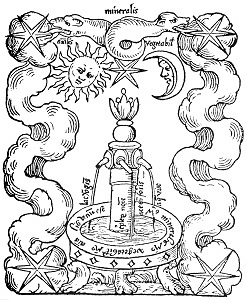
The Fountain of Life
12 chapters English Public domain
About this book
Solomon ibn Gabirol, also known as Avicebron, was a Spanish-Jewish poet and philosopher of the eleventh century. This is a translation of a key extract from his major philosophical work, the Fons Vitae, or Fountain of Life. In this text, Gabirol uses a Socratic dialog as a framework to discuss his theory of the 'First Cause.' Written in Arabic, the Fons was translated into Latin in the 12th century, The work was attributed to 'Avicebron,' who was not identified as Jewish but as Christian or possibly Muslim. One reason is that Gabirol does not reference the Tanakh or Talmud, as would be normal for a Jewish intellectual from this time and place. In addition, his neo-Platonic views seem to place him in a more Christian intellectual current. However, in 1846, a scholar named Solomon Munk announced that he had discovered that Avicebron was the same person as Gabirol.
A volume of Gabirol's poetry is also available at this site.
Table of contents
12 chapters
Audiobook
Listen to this edition
Audiobooks are coming soon
Narrated editions will appear here when they are ready to listen.
Membership
Support the archive
$10 / month
Helps fund new texts & growth
Unlimited highlights & annotations
Unlimited bookmarks
Ad free reading experience
Early access to new features
Early access to quality TTS Audiobooks
Priority support & feature requests
4,000 Points monthly for Search usage
Access to point system rewards and value
Cancel anytime. Helps us pay the bills.
Discussion
Community conversation
Discussions are coming soon
Join conversations around this text and its interpretations.
The Fountain of Life
12 chapters English Public domain
About this book
Solomon ibn Gabirol, also known as Avicebron, was a Spanish-Jewish poet and philosopher of the eleventh century. This is a translation of a key extract from his major philosophical work, the Fons Vitae, or Fountain of Life. In this text, Gabirol uses a Socratic dialog as a framework to discuss his theory of the 'First Cause.' Written in Arabic, the Fons was translated into Latin in the 12th century, The work was attributed to 'Avicebron,' who was not identified as Jewish but as Christian or possibly Muslim. One reason is that Gabirol does not reference the Tanakh or Talmud, as would be normal for a Jewish intellectual from this time and place. In addition, his neo-Platonic views seem to place him in a more Christian intellectual current. However, in 1846, a scholar named Solomon Munk announced that he had discovered that Avicebron was the same person as Gabirol.
A volume of Gabirol's poetry is also available at this site.
Table of contents
12 chapters
Audiobook
Listen to this edition
Audiobooks are coming soon
Narrated editions will appear here when they are ready to listen.
Membership
Support the archive
$10 / month
Helps fund new texts & growth
Unlimited highlights & annotations
Unlimited bookmarks
Ad free reading experience
Early access to new features
Early access to quality TTS Audiobooks
Priority support & feature requests
4,000 Points monthly for Search usage
Access to point system rewards and value
Cancel anytime. Helps us pay the bills.
Discussion
Community conversation
Discussions are coming soon
Join conversations around this text and its interpretations.

The archive, offline Own the Wisdom of the Ages Every text in the library on a single USB drive. Read offline, cite freely, keep forever. No subscription required.
Get the drive $127.00
The Fountain of Life
12 chapters English Public domain
About this book
Solomon ibn Gabirol, also known as Avicebron, was a Spanish-Jewish poet and philosopher of the eleventh century. This is a translation of a key extract from his major philosophical work, the Fons Vitae, or Fountain of Life. In this text, Gabirol uses a Socratic dialog as a framework to discuss his theory of the 'First Cause.' Written in Arabic, the Fons was translated into Latin in the 12th century, The work was attributed to 'Avicebron,' who was not identified as Jewish but as Christian or possibly Muslim. One reason is that Gabirol does not reference the Tanakh or Talmud, as would be normal for a Jewish intellectual from this time and place. In addition, his neo-Platonic views seem to place him in a more Christian intellectual current. However, in 1846, a scholar named Solomon Munk announced that he had discovered that Avicebron was the same person as Gabirol.
A volume of Gabirol's poetry is also available at this site.
Table of contents
12 chapters
Audiobook
Listen to this edition
Audiobooks are coming soon
Narrated editions will appear here when they are ready to listen.
Membership
Support the archive
$10 / month
Helps fund new texts & growth
Unlimited highlights & annotations
Unlimited bookmarks
Ad free reading experience
Early access to new features
Early access to quality TTS Audiobooks
Priority support & feature requests
4,000 Points monthly for Search usage
Access to point system rewards and value
Cancel anytime. Helps us pay the bills.
Discussion
Community conversation
Discussions are coming soon
Join conversations around this text and its interpretations.